A building made for railway journeys
The operator dates the Gyeongseong Station building to 1925, with completion in September and service beginning in October. These dates describe this building, not the founding of the neighborhood.
In Seoul's Bongnae-dong 2-ga, the old railway station became Culture Station Seoul 284. Read the building's changing role, from a place of departures to a space for exhibitions.
The operator dates the Gyeongseong Station building to 1925, with completion in September and service beginning in October. These dates describe this building, not the founding of the neighborhood.
Seoul Metropolitan Archives records the former station's reopening as Culture Station Seoul 284 in 2011. The building remained, but its role changed from transport to culture. It is separate from today's train boarding area.
The operator and Korea Tourism Organization list the address as 1 Tongil-ro; the tourism listing also identifies Bongnae-dong 2-ga. This page lists that venue alone, not a multi-neighborhood trail or a fixed walking itinerary. Food and café searches remain separate.
From a railway station to a cultural space. After restoration, the old Seoul Station opened as Culture Station Seoul 284 in 2011. Look for the central arch and the decoration around the clock in both photographs.
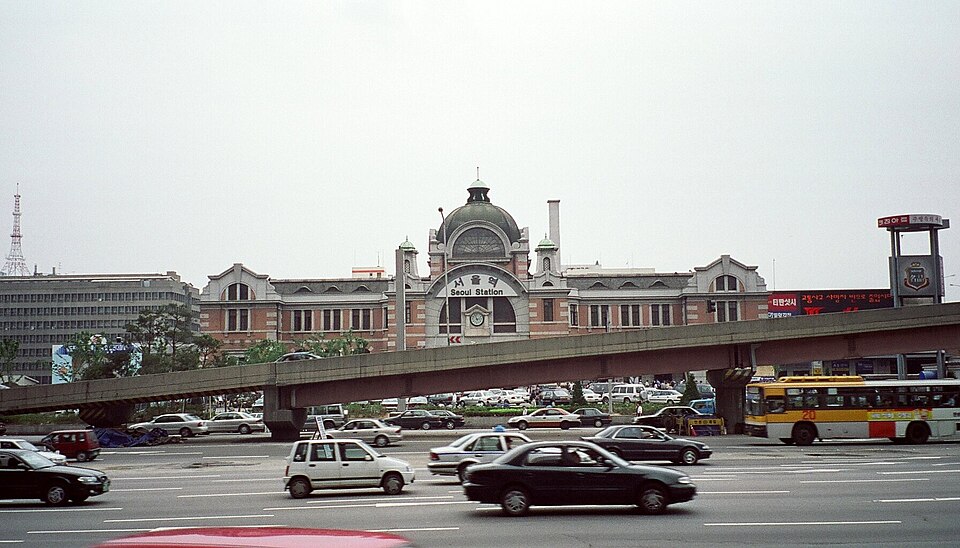
Old Seoul Station seen from across the road. An elevated structure and traffic cross the view of its red-brick facade.
Photographed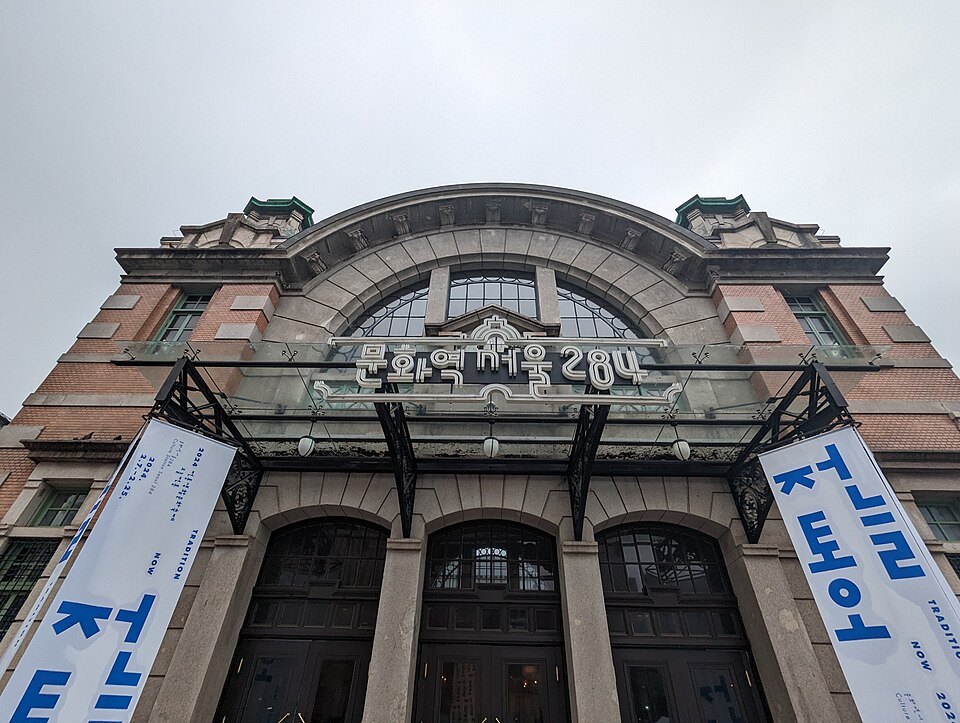
A close, upward view of the entrance to Culture Station Seoul 284, with its name and exhibition banners beneath the arch.
PhotographedThe same building, photographed from different positions: across the road in 1998, and close to the entrance looking upwards in 2024. Each image records its own date, not the building's condition today.
Read the official history ↗Capture dates follow the source records. Wikimedia Commons thumbnails · no additional cropping or compositingPublic records explain dates and places. Residents preserve the shops, school roads, sounds, and ordinary moments that maps cannot hold.
These names come from the Korean record, not a verified walking itinerary. Check the original references before visiting.
1 Tongil-ro, Jung-gu, Seoul. This is the former station building, not the current train boarding area. Closed on Mondays and when no exhibition or event is running; check the operator's schedule before visiting.
These links open current map results, not fixed recommendations.
Use the full Korean map query below to find the old station at 1 Tongil-ro. Do not confuse it with the current train boarding area.
Visit according to the exhibition scheduleOpening hours differed between the operator and the tourism listing when checked on 17 September 2026. Use the operator's current program and visit notices; this page does not claim the building is open today.
Opening hours, admission, and transport conditions can change. Check the linked map and official information before you go.